
From June to September, daytime temperatures in Dubai regularly pass 40°C, and humidity along the coast can make even a short walk feel demanding. Many people pause their routine until the weather cools, then spend October starting again. With a few changes to timing, setting and intensity, you can keep training through the summer safely and arrive at the cooler months fitter instead of starting from zero.
- Move outdoor sessions to early morning or late evening, and take hard training indoors.
- Expect your heart rate to be higher in heat and humidity; lower the pace rather than chasing normal numbers.
- Start every session hydrated and replace both fluid and salts during long or sweaty workouts.
- Stop at the first signs of heat illness: dizziness, nausea, headache, confusion or cramps.
1. Change the time, not the habit
The simplest adjustment is timing. Outdoor training is most comfortable before sunrise and shortly after it, or late in the evening once the sun has set. Even then, humidity can stay high, so outdoor sessions are best kept short and moderate. Midday outdoor exercise is best avoided completely in summer.
If your current routine depends on outdoor running, beach workouts or park sessions, talk to your coach about a summer version: earlier start times, shorter loops near shade and water, or a temporary move indoors two or three days a week.
2. Use indoor options
Dubai is well suited to indoor training. Residential building gyms, commercial gyms, studios, indoor pools and your own living room all work. Summer is a good time to focus on strength training, mobility and technique, which are easier to do well in a cool room than in the heat. Many coaches offer home sessions or online coaching, which removes the need to travel in the middle of the day.
Swimming is another useful summer activity. Outdoor pools can become very warm by late afternoon, so early sessions or shaded and indoor pools are usually more comfortable. You can compare swimming coaches who list the pools they use.
3. Adjust intensity for heat and humidity
Your body works harder to cool itself in the heat. Heart rate rises faster, sweat rate increases and the same pace feels more difficult. This is normal and is not a sign that you have lost fitness. Use effort, breathing and a simple rating scale to guide intensity rather than fixed pace targets.
- Reduce running pace or interval length for the first two weeks of hot weather while your body adapts.
- Take longer rest periods between hard efforts.
- Shorten outdoor sessions and add the remaining work indoors.
- Plan easier days after poor sleep, which is common during hot nights.
4. Hydration and salts
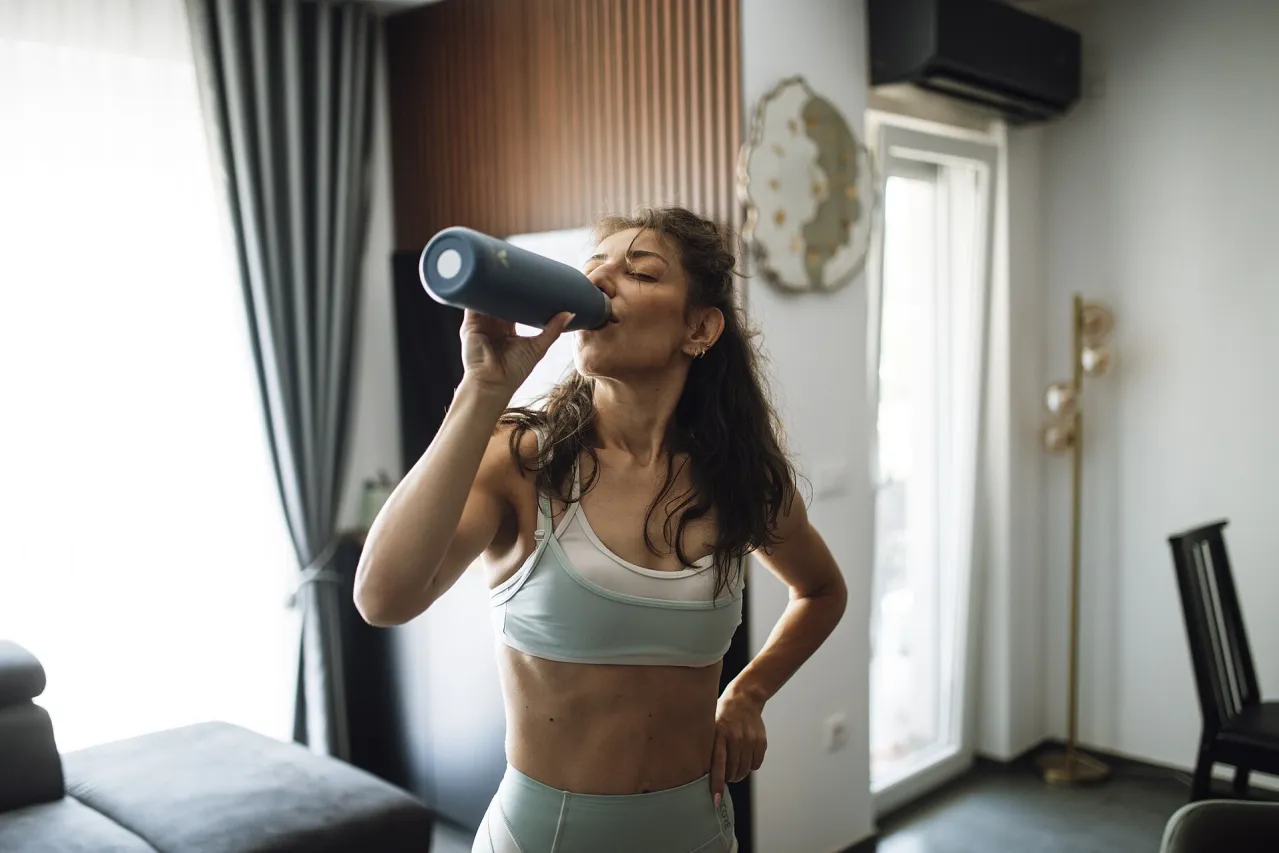
Start each session already hydrated by drinking regularly through the day, not only right before training. During sessions longer than about an hour, or whenever you sweat heavily, replacing salts as well as water helps. Electrolyte drinks or salty snacks can be useful; people with medical conditions should ask their doctor what suits them. A simple sign of good hydration is light-coloured urine during the day.
Avoid relying on thirst alone in very hot conditions, but also avoid drinking very large amounts at once. Steady intake works better. Weighing yourself before and after a long session gives a rough idea of how much fluid you lost.
5. Know the warning signs
Heat exhaustion can include heavy sweating, dizziness, headache, nausea, cramps and weakness. Stop exercising, move to a cool place, drink fluids and rest. Heat stroke is a medical emergency: confusion, hot skin, fainting or stopping sweating require urgent help. In the UAE, call 998 for an ambulance. Training with a coach or a partner in summer adds an extra layer of safety, especially outdoors.
6. How a coach can help in summer
A good coach plans the summer rather than simply moving sessions indoors. That can mean a strength block in June and July, technique work in the pool, or preparation for an event in the cooler season. Ask your coach how they adjust training in hot weather, which locations they use in summer and whether sessions can switch between home, gym and online as needed.
Frequently asked questions
Is it safe to run outside in Dubai in summer?
Short, easy runs very early in the morning or late in the evening can be manageable for healthy, acclimatised runners who hydrate well. Hard or long outdoor runs in summer heat carry a higher risk; many runners move these to a treadmill.
What is the best time to exercise in Dubai in summer?
Before or shortly after sunrise for outdoor sessions, or any time of day for indoor training in an air-conditioned space.
Should I stop training until October?
There is no need to stop. A summer plan with indoor strength, swimming and shorter outdoor sessions keeps your progress going.
Planning your summer routine? Browse personal trainers in Dubai or read about home versus gym training.